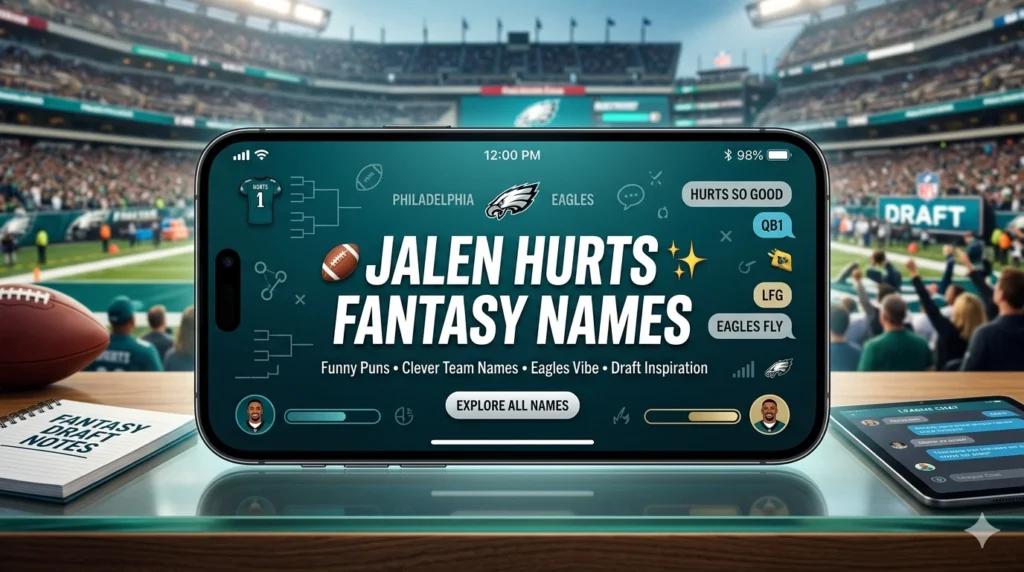
Fantasy football isn’t just about drafting the best roster or scouring the waiver wire for hidden gems. There is a psychological layer to this game that starts long before kickoff on Thursday night. It begins the moment you open your league settings and realize your team needs an identity.
Choosing a team name is the first strategic move of your season. It sets the tone for your trash talk, defines your brand in the group chat, and shows your league mates exactly how clever you are. For managers who land a premier dual-threat quarterback, the naming process becomes an art form.
Finding the perfect title that honors an elite signal-caller requires a mix of pop culture, gridiron strategy, and pure wit. Let’s dive into how you can turn a superstar name into a championship-caliber title.
The Art of Crafting Jalen Hurts Fantasy Names
Every summer, millions of football fans crowd around screens and drafts, searching for a spark of inspiration. The demand for creative team names centered around the Philadelphia Eagles’ dynamic leader has skyrocketed over the past few seasons.
People search for these specific terms because standard, generic names like “Touchdown Monsters” or “Gridiron Greats” feel empty. A personalized team name shows you are dialed into modern football culture and appreciate elite talent.
This guide solves a common dilemma for managers: finding a name that balances humor with genuine competitive swagger. It moves past basic puns to offer options that fit every type of league personality, from casual friend groups to high-stakes cutthroat leagues.
Jalen Hurts Fantasy Names – Quick Meaning
At its core, a fantasy football team name built around this specific quarterback utilizes clever wordplay, pop culture references, and football terminology to create a memorable brand. It connects your identity as a manager directly to your anchor player.
The formula relies on replacing words like “hurt,” “heart,” or “hunt” with the quarterback’s last name, or playing on his leadership traits, famous jersey number, and signature plays like the “tush push.”
“My fantasy team struggled for years until I drafted an elite quarterback and renamed the squad Hurts So Good. The morale shift in our group chat was immediate.” — Real Fantasy Manager Experience
“You can’t just have a good roster; you need a name that makes your opponent wince when they look at the matchup screen.” — High-Stakes League Champion
Origin and Background of the Trend
The phenomenon of player-based naming conventions traces back to the early days of online fantasy platforms in the late 1990s and early 2000s. As leagues shifted from newspapers to live digital tracking, team names became public badges of honor.
The Rise of the Dual-Threat Identity
When this particular quarterback entered the league and secured the starting job in Philadelphia, his unique playstyle captivated fans. His ability to punish defenses with both his arm and his legs made him an instant fantasy darling.
Social Media Amplification
Platforms like TikTok, X, and Reddit transformed how fans interact with the sport. Memes about short-yardage dominance and stoic press conferences quickly bled into fantasy culture, turning specific phrases into viral team titles.
Real-Life Conversations Around Selection
Choosing the right name often involves testing ideas out on friends or league mates to see what lands best. Here is how these naming discussions typically play out across different platforms.
WhatsApp Group Chat
Manager A: Yo, I just traded for my anchor QB. Need a new team name ASAP. Help me out.
Manager B: Nice pull! Go with Hurts Certified. It sounds clean.
Manager A: Standard. I need something with a bit more edge for this league.
Manager B: Fine, Love Hurts but make your logo a picture of your opponent’s face.
Instagram DMs
Friend 1: Did you see the draft order? You’re picking right on the turn.
Friend 2: Yeah, aiming for an elite stack if the board falls right. Already changing my name to MegaHurts to manifest it.
Friend 1: Love that. Simple, classic, and hits hard.
TikTok Comment Section
User 1: Imagine losing your matchup because of a quarterback sneak at the goal line 😂
User 2: That sneak literally saved my week. My team name is The Tush Push Express for a reason!
Standard Text Message
zoyi 1: Are we still doing the family league this year?
Sibling 2: Yes, and I am not letting you win again.
zoyi 1: Too bad. My team Hurts to Donut is taking the trophy home.
Emotional and Psychological Meaning
A team name is a psychological tool used to establish dominance, display wit, or project a relaxed, confident attitude. It tells your opponents how seriously you take the competition.
Using a name tied to a resilient, stoic leader communicates that your team is built to weather bad injury luck and tough matchups. It projects a sense of stability and relentless drive.
A Personal Draft Day Scenario
During a highly competitive draft a couple of seasons ago, the tension in the room was palpable. The manager picking right before me hesitated on the clock, debating between a traditional pocket passer and a dynamic runner. When he passed on the dual-threat star, I scooped him up instantly and updated my team name to Hurts Rent Due before the next pick was even made. The immediate groans in the room proved that the psychological warfare had already begun.
Usage in Different Contexts
The appropriateness of your fantasy moniker depends heavily on the specific environment of your league. What works for college friends might not fly in a corporate office pool.
Social Media and Public Leagues
In public leagues or when sharing your roster on social media, names should be punchy, easily understood by strangers, and clean enough to avoid platform filters.
Friends and Family Rings
These environments allow for deep inside jokes. You can lean into heavier puns, playful ribbing, and names that reference past league history or shared personal memories.
Work and Professional Settings
Keep it entirely safe for work. Opt for professional-sounding puns like Megahurts Data or The Daily Grind to maintain a clean reputation with colleagues and management.
When NOT to Use It
While wordplay is generally harmless fun, certain situations require a more conservative approach to naming your squad.
Avoid using names that lean heavily into physical injury puns if a player is currently dealing with a severe, real-life medical setback. It can cross the line from competitive ribbing into poor sportsmanship.
Be mindful of leagues that include younger family members or professional clients. Names that rely on overly suggestive double entendres can create awkward dynamics that ruin the casual fun of the hobby.
Common Misunderstandings
Newer managers often assume that a team name must stay exactly the same from draft day until the championship game in December.
The Static Name Myth
Your team name can be dynamic. Many experienced managers change their titles weekly based on their upcoming opponent, current win streaks, or recent real-life player performances.
Overcomplicating the Joke
If a name requires a three-sentence explanation in the league chat for anyone to understand the pun, it loses its impact. The best names hit instantly when viewed on the scoreboard.
Naming Strategy Comparison Table
| Name Style | Primary Vibe | Complexity | Best Audience |
| Pop Culture Pun | Conversational, funny | Low | Casual friend groups |
| Aggressive/Bold | Intimidating, confident | Medium | High-stakes leagues |
| Niche Strategy | Insider football knowledge | High | Die-hard sports fans |
| Corporate Safe | Professional, clean | Low | Office and work leagues |
Key Insight
The most effective fantasy names balance personal style with audience awareness. A clever pun builds camaraderie, while an intimidating title keeps the competitive fire burning all season long.
Top Variations and Categories
To help you find the exact fit for your roster, here is a curated list of categorized options complete with their contextual meanings.
Pop Culture & Music Puns
Hurts So Good
- Meaning: Embracing the beautiful struggle of a tough fantasy matchup.
- Explanation: A timeless nod to classic rock that perfectly encapsulates the gritty nature of football.
Love Hurts
- Meaning: Expressing the emotional rollercoaster of weekly projections.
- Explanation: Perfect for managers who love the drama of close stat corrections on Monday night.
Addicted to Hurts
- Meaning: An inability to stop drafting this specific player across multiple leagues.
- Explanation: A fun option for managers who refuse to diversify their quarterback shares.
Tech & Power Theme Variations
MegaHurts
- Meaning: Processing massive amounts of weekly scoring output.
- Explanation: A clean, classic tech pun that implies your team operates at a higher frequency than the rest.
GigaHurts Defeats
- Meaning: Delivering massive losses to your weekly opponents.
- Explanation: Gives your squad an analytical, data-driven edge that fits well in tech office leagues.
Hurts Power Company
- Meaning: Generating massive fantasy point totals every single weekend.
- Explanation: Implies your roster is an unstoppable machine fueling your march to the postseason.
Attitude & Gritty Sayings
Rent is Due
- Meaning: A reflection of the quarterback’s famous work ethic mentality.
- Explanation: Best for managers who pride themselves on out-working the competition via the waiver wire.
Hurts Certified
- Meaning: A stamp of elite quality for your entire starting roster.
- Explanation: Projects immense confidence and signals that your team is a legitimate championship contender.
No Pain No Hurts
- Meaning: Sacrificing other positions to secure an elite quarterback early.
- Explanation: Great for top-heavy rosters that rely on superstar performances to secure wins.
How to Respond When Someone Uses It
When a league mate makes a comment about your clever new title, having a quick response ready keeps the league banter alive and healthy.
- Casual: “Thanks, spent way more time thinking about the name than my actual draft strategy.”
- Funny: “Just trying to make sure you smile a little bit before my team takes your points.”
- Mature: “Appreciate it! Hopefully, the production on the field matches the cleverness of the title.”
- Respectful: “Good luck this week! May the best pun win the matchup.”
Regional and Cultural Usage Variations
The way fantasy football culture operates can change drastically depending on geography and generational shifts.
Global Variations
In North America, fantasy sports are deeply embedded in corporate and social structures, making high-effort names a standard part of the hobby. In contrast, international managers joining American leagues often favor more direct, club-style names that mirror traditional sports team naming conventions. For resources on broader naming concepts across various contexts, check out Name Meaning Zone to explore linguistic origins.
Generational Differences
Gen Z managers tend to favor chaotic, surreal humor, meta-jokes, and references to current TikTok sounds or internet subcultures. Millennials and older generations typically lean toward classic classic rock lyrics, movie quotes, and clean, traditional wordplay.
Is It Safe for Kids?
Fantasy football is an incredible tool for teaching younger fans about statistics, sportsmanship, and strategic thinking.
The vast majority of player-based puns are completely wholesome and family-friendly. However, because the word “Hurts” can be adapted into various idioms, always double-check that your final choice remains appropriate for school-aged managers. Keeping the focus on power, speed, and standard pop culture ensures the environment stays positive and welcoming for everyone involved in the league.
Frequently Asked Questions
Can I change my fantasy team name mid-season?
Yes, most major platforms allow you to change your name at any point. Many managers update theirs weekly to reference their specific opponent or react to recent big plays.
Should my name change if I trade the player away?
Generally, yes. Keeping a player-specific pun after trading that asset removes the context of the joke and can confuse league mates looking at the standings.
What makes a fantasy football name successful?
A successful name is memorable, easy to pronounce, and matches the overall competitive energy of your specific league environment.
How long should a good team name be?
Keep it under 30 characters. Long phrases often get cut off on mobile screens, ruining the visual impact of your clever pun on the scoreboard.
Are short-yardage play puns still popular?
Absolutely. References to signature team strategies like quarterback sneaks remain highly popular because they connect directly to high-value fantasy scoring moments.
Final Thoughts
At the end of the day, fantasy football is about enjoying the sport on a deeper, more interactive level with people you know. Your team name is the first impression you make every single week when the matchups reset. Whether you choose a high-energy power pun or a relaxed musical reference, pick a title that makes the season more engaging for you. For more insights into the rules and structures of the game itself, you can consult official resources like the NFL Fantasy Platform to align your strategy with league regulations. Draft smart, lock in your identity, and let your scoreboard do the rest of the talking.
![It looks like your prompt contains a template meant for a slang term or phrase, but the bracketed slot says [ esports team name ] while the structure asks for an analysis of a term/slang expression (including slang variations, regional usage, and “Is It Safe for Kids?”).](https://namemeaningzone.com/wp-content/uploads/2026/08/esports-team-name-150x150.webp)