
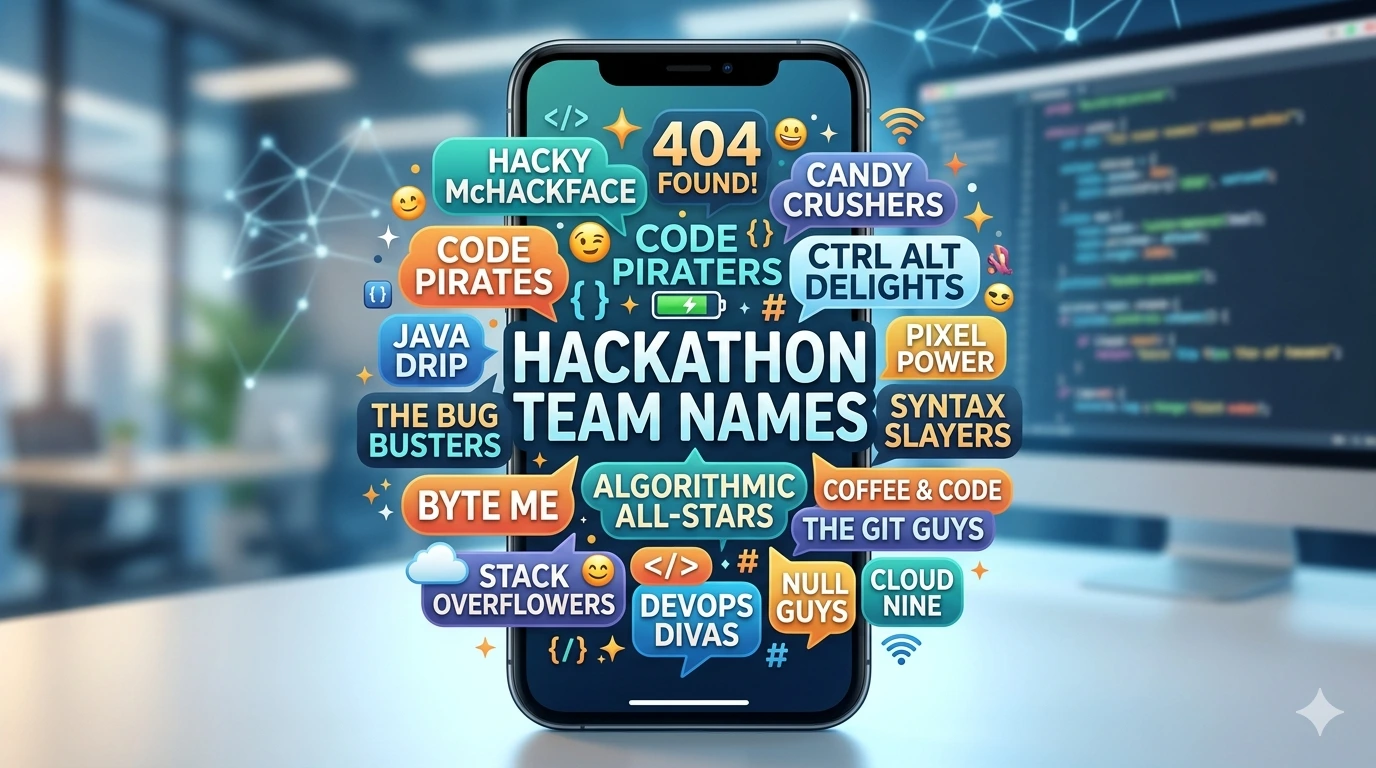
Choosing the right identity for your group is often the first real test of a hackathon. It sets the tone for your entire weekend of building, debugging, and pitching.
Over the years, I have mentored dozens of development teams and judged countless tech competitions. I have seen firsthand how a name can influence a team’s internal energy and external perception.
People search for the perfect moniker because a good title bridges the gap between chaotic, late-night coding sessions and a polished, professional presentation. It solves the friction of identity crisis before the first line of code is even written.
Hackathon Team Names – Quick Meaning
A hackathon team name is a temporary, high-impact brand identity chosen by a group of developers, designers, and project managers for a tech sprint.
This title serves as the team’s signature on leaderboards, Github repositories, and presentation slides. It needs to balance technical wit with memorable branding.
Core Elements of a Great Team Identity
- Thematic Relevance: It hints at the technology you are building or the problem you are solving.
- Cultural Resonances: It connects with shared developer humor, memes, or pop culture.
- Aspirational Tone: It project confidence, speed, and creative problem-solving.
“We started as ‘Team 4’, but renaming ourselves ‘The Out of Memory Boys’ instantly gave us a unified identity that made the judges smile before we even started pitching.” — Alex M., Full-Stack Engineer
“A great name doesn’t just look good on a leaderboard. It keeps morale high when your database crashes at 3:00 AM.” — Sarah T., UX Designer
Origin & Background
The tradition of crafting highly specific, witty team identities traces back to the early university hackathons of the late 1990s and early 2000s.
Originally, teams used basic descriptors like “MIT Team A” or “The Java Group.” However, as developer culture merged with internet meme culture, names became a canvas for creative expression.
The Rise of Tech Humor
The expansion of open-source communities fostered a unique brand of insider humor. Phrases related to broken code, endless loops, and caffeine reliance became badges of honor.
Social Media and the Pitch Era
With platforms like X (formerly Twitter) and TikTok turning hackathon highlights into viral content, branding became vital. Modern teams select names that look great in a hashtag and sound punchy in a 60-second recap video.
The meaning has evolved from a simple identifier into a strategic tool used to catch the attention of corporate sponsors and venture capitalists scouting for talent.
Real-Life Conversations
Here is how the struggle and triumph of choosing an identity look in everyday communication channels.
WhatsApp Group Chat
Developer Alex: Hey team, we need to register our project on Devpost in ten minutes. What are we calling ourselves?
Designer Chloe: Something creative! Please let’s not just use our initials.
Data Scientist Sam: How about The Gradient Descents? It fits our AI theme.
Developer Alex: Love it. It sounds professional but clever. Registering us now!
Instagram DM
Participant Liam: Did you see the team list for the weekend?
Participant Maya: Yeah, someone literally named their group Ctrl+Alt+Defeat.
Participant Liam: That is brilliant. Honestly, I’m already intimidated by their confidence.
TikTok Comment Section
User1: The energy of the team named Semicolon Survivors was unmatched this weekend.
Creator: Honestly, they won the crowd favorite award just based on that name alone!
Text Messages
Teammate A: We have been stuck on this API bug for four hours.
Teammate B: True to our name, The Infinite Loopers.
Teammate A: Haha, at least we are staying on brand. Let’s fuel up on coffee and break out of it.
Emotional & Psychological Meaning
An identity choice reveals a profound psychological truth about group dynamics: shared humor creates psychological safety.
When a team embraces a witty or self-deprecating name, it lowers the stakes of failure. It acknowledges that while the competition is fierce, the journey is meant to be collaborative and educational.
Modern tech communication relies heavily on these linguistic micro-signals to build trust quickly among strangers who have only met via Discord hours prior.
A Mentorship Reflection
During a major global hackathon last year, I watched a team of complete strangers struggle to communicate. They were tense, polite, and terrified of making mistakes.
I advised them to stop coding for five minutes and change their generic name to Coffee Into Code. The collective laugh they shared over that silly choice broke the ice, fundamentally shifting their communication from stiff formality to fluid collaboration.
Usage in Different Contexts
The appropriateness of your group identity depends heavily on the specific environment of the competition.
Social Media
On public platforms, your name acts as a handle. You want something punchy, memorable, and free of highly obscure jargon that an everyday audience wouldn’t understand.
Friends & Relationships
When hacking with close peers, inside jokes and highly personalized humor can strengthen your bond and make the intense weekend feel like a fun passion project.
Work and Professional Settings
Corporate, internal hackathons require a refined approach. While you can still be clever, you should avoid names that highlight incompetence or system failures, such as Production Crashers. Instead, focus on innovation and velocity.
Casual vs. Serious Tone
A student hackathon welcomes wild, meme-centric titles. Conversely, a high-stakes venture capital-backed Web3 hackathon demands a title that sounds like a venture-backed startup.
When NOT to Use It
While humor is highly encouraged, certain boundaries should never be crossed in a professional tech environment.
Avoid names that rely on offensive language, exclusionary insider gatekeeping, or political controversies. If a name requires a complex explanation to prove it isn’t offensive, discard it immediately.
Cultural Sensitivity
Steer clear of phrases that appropriate cultural idioms or trivialize real-world crises. A name that sounds edgy to a small group can alienate judges and disqualify you from prizes.
Misunderstanding Risks
Do not pick names that imply your product is broken or malicious, such as Data Leakers. Judges scanning leaderboards quickly might take the name literally and form an immediate negative bias against your presentation.
Common Misunderstandings
The biggest misconception is that a funny name means a team isn’t serious about winning.
In reality, the most experienced developers often choose the most playful names because they understand that a relaxed mind produces better code than a stressed one.
Literal vs. Figurative Interpretation
Beginners often assume a team named The Bug Hunters will only build security tools. Experienced participants know this is simply a figurative nod to the universal human experience of debugging.
Comparison Table
| Team Name Type | Primary Vibe | Best Suited For | Risk Factor |
|---|---|---|---|
| Pun-Based (Algorithmics) | Clever, approachable | Student hackathons | Can feel cheesy |
| Hyper-Professional (Apex Analytics) | Serious, corporate | VC-sponsored events | Can feel boring |
| Self-Deprecating (Bug Makers) | Relatable, fun | Casual community events | May lack authority |
| Sci-Fi Inspired (Quantum Leap) | Visionary, bold | Deep tech & AI hacks | Can sound pretentious |
Key Insight
The ultimate goal of your team identity is to strike a balance between memorable humor and professional credibility, ensuring you stand out without losing authority. For more insights on naming dynamics across various fields, check out resources on Name Meaning Zone, which explore how titles shape identity.
Variations & Types
1. The Code Puns
- Semicolon Outlaws: A nod to the tiny character that breaks entire systems.
- Java Junction: Perfect for teams heavily reliant on enterprise backend systems.
2. The AI & Data Specialists
- Neural Navigators: Ideal for teams building complex machine learning pipelines.
- The Outliers: A clever double meaning for data analysts who stand out from the crowd.
3. The Late-Night Warriors
- 3 AM Coffee Club: Celebrates the exact hour when breakthroughs usually happen.
- The Sleep Deprived: Honest, relatable, and universally understood by every participant.
4. The Speed Daemons
- Sprint Masters: Focuses heavily on agile methodologies and rapid prototyping.
- Overclocked: Implies your team is running at maximum processing capacity.
5. The Problem Solvers
- Ctrl+Z Enthusiasts: For groups that aren’t afraid to undo mistakes and iterate quickly.
- Stack Overflow Graduates: A humorous tribute to the website that keeps the tech industry running.
How to Respond When Someone Uses It
When a judge, fellow competitor, or organizer compliments or references your team name, your response should match the energy of your choice.
Casual Replies
“Thanks! We spent more time debating the name than we did architecting the database.”
Funny Replies
“We figured if our code doesn’t work, at least our branding is flawless.”
Mature Replies
“We wanted something that captured our technical focus while keeping the team energy light and collaborative.”
Respectful Replies
“Thank you, we appreciate that. We wanted our identity to reflect the fast-paced spirit of this event.”
Regional & Cultural Usage
The reception of developer humor varies significantly across geographic regions and generations.
Western Culture
In US and European tech hubs, self-deprecating humor and pop culture references are highly celebrated. Teams love playing up the trope of the chaotic, pizza-fueled coder.
Asian Culture
In major tech ecosystems like India or Singapore, there is often a stronger preference for names that emphasize skill, innovation, and victory, such as Tech Pioneers or Alpha Devs.
Global Internet Usage
The global remote hacking community heavily utilizes universal tech acronyms (API, IDE, Git) to create cross-cultural unity that transcends language barriers.
Generational Differences
While Millennials lean heavily into classic tech puns and sci-fi tropes, Gen Z participants prefer highly absurd, meta-humor or trending meme references that shift rapidly from month to month.
Is It Safe for Kids?
Yes, hackathon team naming is a universally safe and constructive creative exercise for young learners.
For youth and high school competitions, encouraging students to invent a team identity fosters essential soft skills like compromise, branding, and collaborative brainstorming. It transforms an intimidating technical challenges into an approachable, gamified experience.
FAQs
How long should a hackathon team name be?
Keep your name between two to four words. Anything longer becomes difficult to read on mobile leaderboards and challenges the graphic design of presentation slides.
Can we change our team name during the hackathon?
Yes, most platforms like Devpost allow updates until the final project submission deadline. However, changing it too late can confuse mentors tracking your progress.
Should our name match our project topic?
It helps, but it is not mandatory. A flexible name allows you to pivots your project idea mid-weekend without needing a total rebrand.
What are some good names for an all-women tech team?
Excellent options include Ada’s Code, The Byte Queens, or Grace Hoppers, which pay tribute to legendary female pioneers in computer science. For additional ideas on tech group dynamics, Devpost showcases thousands of active team portfolios.
Does a good team name actually help you win?
Final Thought
At the end of the day, the name you choose is the first line of your team’s unique story for the weekend. It transforms a group of separate individuals into a singular, focused unit ready to build something incredible from scratch.
Pick something that makes your team smile, wear it with pride during your pitch, and let that shared identity drive your creativity straight through to the final demo.